
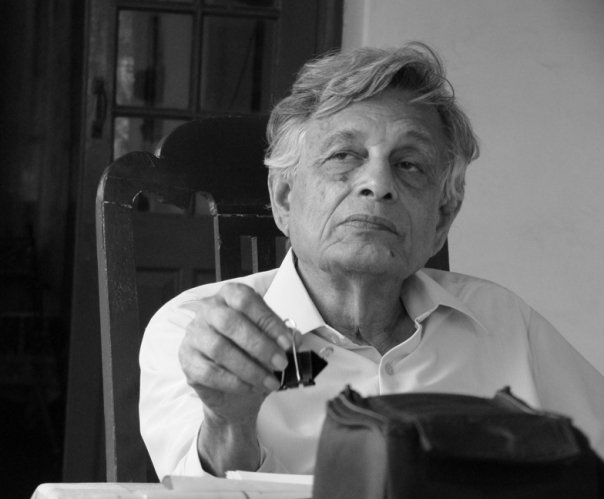
Professor Irfan Habib
Vice President
Professor Irfan Habib is one of the most distinguished historians of modern India, widely recognized for his pioneering contributions to the study of medieval Indian history and historiography. A leading figure of the Aligarh School, Habib’s scholarship is marked by a rigorous methodological framework grounded in Marxist historical analysis, and by its sustained engagement with questions of economy, society, and class structures in pre-colonial India. His work has significantly reshaped understandings of agrarian systems, land revenue mechanisms, and the material conditions underlying the Mughal Empire.
Habib’s research is particularly noted for its empirical depth and critical use of primary sources, including Persian chronicles, revenue records, and administrative documents. His seminal work, The Agrarian System of Mughal India (1556–1707), remains a foundational text, offering a detailed reconstruction of agrarian relations and rural society. By foregrounding issues of production, surplus extraction, and class relations, he challenged earlier historiographical traditions that tended to privilege political narratives over socio-economic analysis.
In addition to his contributions to medieval economic history, Habib has written extensively on themes such as technology, cartography, and methods of historical inquiry. His scholarship reflects a consistent commitment to analytical clarity, source criticism, and interdisciplinary engagement. He has also contributed to broader historiographical debates, particularly in relation to the interpretation of India’s past through materialist perspectives.

